


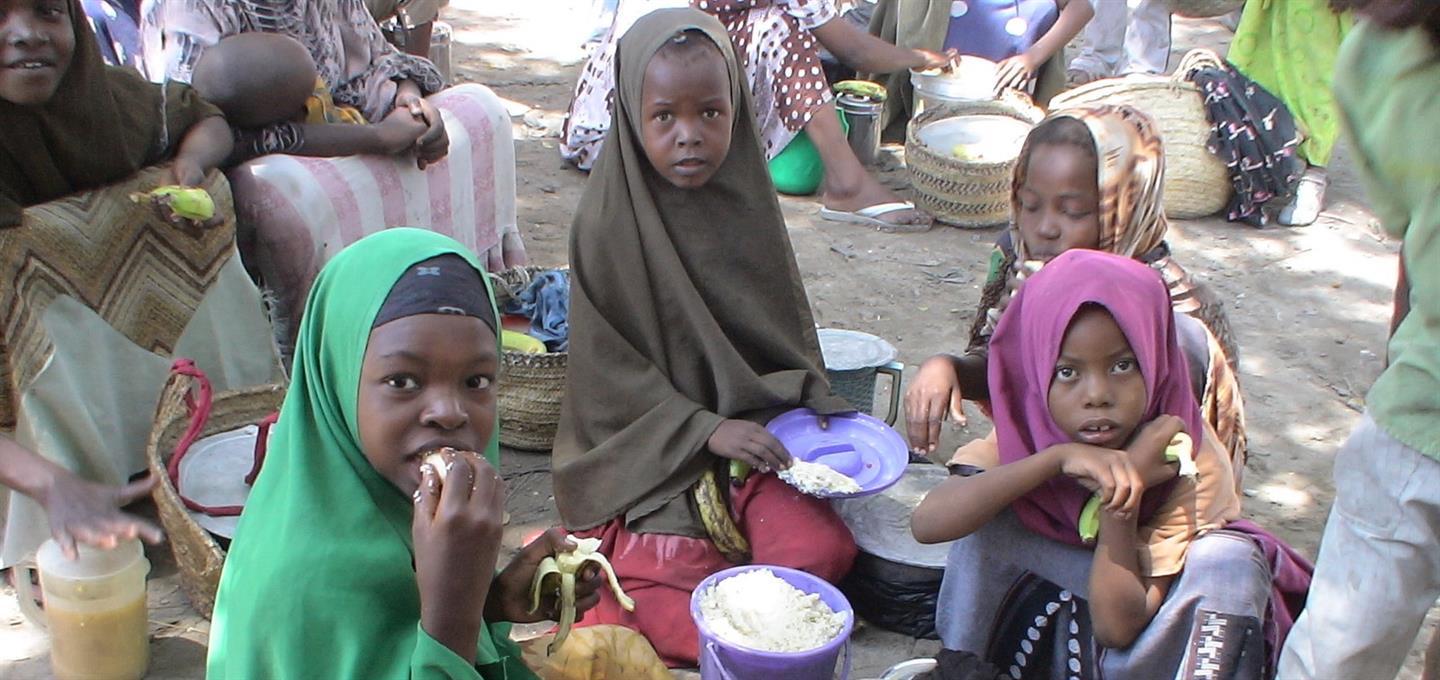
Somalië: vluchtelingen
Noodtoestand
In Somalië heeft de regering de noodtoestand uitgeroepen. Ze zitten op het randje van een hongersnood. 'We hebben nu hulp nodig om een menselijke tragedie te voorkomen', zegt president Mohamed Abdullahi in een reactie naar de pers. Somalië ligt in de Hoorn van Afrika en wordt geteisterd door burgeroorlogen, piraterij en natuurrampen. Door aanhoudende droogtes, verwoestende overstromingen en conflicten zijn veel Somaliërs afhankelijk van noodhulp.
- 1 op de 3 mensen is afhankelijk van noodhulp.
- Meer dan 2 miljoen mensen zijn op de vlucht voor honger en geweld.
- Ruim de helft van hen is gevlucht naar een buurland.
- 360.000 kinderen zijn accuut ondervoed
- 70.000 kinderen lopen acuut het gevaar om te sterven.
Zo helpen wij
We zorgen dat Somaliërs een zelfstandig bestaan kunnen opbouwen, we steunen vluchtelingen en komen op voor de rechten van vrouwen en kinderen.
- Vluchtelingen die het slachtoffer worden van aanhoudende droogte krijgen voedsel en schoon drinkwater. We bouwen sanitaire voorzieningen en vrijwilligers geven voorlichting over hygiëne.
- Ondervoede kinderen krijgen bijvoeding en ouders en andere verzorgers leren hoe ze in zo’n situatie het beste voor hun kinderen kunnen zorgen. Moeders krijgen begeleiding bij het geven van borstvoeding.
- Ondernemers-in-de-dop krijgen microkrediet. Met dit geld kunnen zij een eigen bedrijfje oprichten en voor hun eigen inkomen zorgen.
- Boeren krijgen zaden en geld om hun productie te verhogen en het voedseltekort terug te dringen.
- Op de radio zenden we speciale programma’s uit over vrouwenrechten, leiderschap en politiek en steunen sociale organisaties die zich inzetten voor democratisering en betrokken samenleving.
- Onze lokale partners investeren in goed onderwijs voor zo veel mogelijk kinderen. Meisjes op de basisschool krijgen techniek en naailes.
Nieuwsberichten Somalië
-
12 september 2023 BlogHoe is het in Somalië?
Somaliërs tonen veel veerkracht, ondanks de extreme droogte en soms onveilige situatie in het land. Marina van Dixhoorn (relatiemanager Somalië) en Nienke Hiemstra (projectleider noodhulp) doen verslag uit Puntland, in het noordoosten van het land. Van veehouders tot vrouwelijke ondernemers: zij richten hun blik op de toekomst. De langetermijnprojecten van Oxfam Novib en onze Somalische partnerorganisatie maken dit ook mogelijk.
Lees meer
-
24 april 2023 BlogDroogte in Somalië: ‘We moeten samen met de gemeenschap oplossingen zoeken’
Miljoenen mensen in Somalië hebben te maken met de ergste droogte in jaren. Een hongersnood dreigt. In plaats van alleen in actie te komen als de nood hoog is, zoals nu, moeten we de oorzaken van de ramp aanpakken. Samen met de gemeenschap zelf. We praten erover met Shahida Suleiman van Oxfam-partner Save Somali Women and Children (SSWC).
Lees meer
-
15 december 2022 BlogVoedsel, veiligheid en vrouwenrechten: collega’s uit Somalië aan het woord
Door klimaatverandering is er extreme droogte en dreigende hongersnood in Somalië. Oxfam Novib verleent humanitaire hulp en is ook op andere gebieden actief, zoals het verbeteren van vrouwenrechten. We spreken met twee humanitaire werkers over de situatie in het Afrikaanse land. “We moeten nu in actie komen en niet wachten tot het ‘officieel’ een hongersnood is.”
Lees meer
-
21 juli 2022 NieuwsOns werk in Somaliland
De huidige hongercrisis in grote delen van Afrika is een gevolg van klimaatverandering, aanhoudende conflicten en wereldwijd stijgende voedselprijzen. Onze collega Nienke Hiemstra is in Somaliland en houdt ons op de hoogte van de ontwikkelingen.
Lees meer